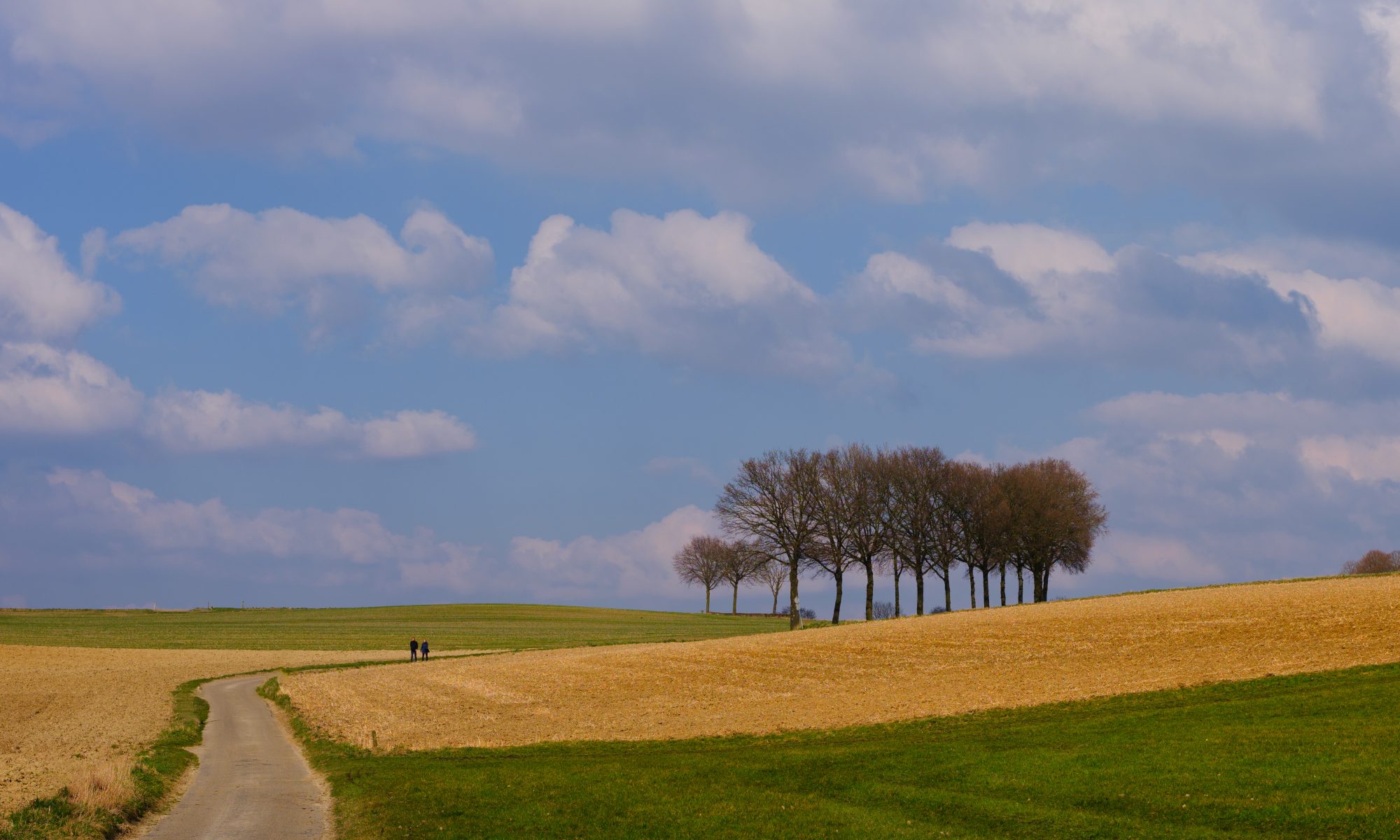
Photos and Haiku
Photos and Haiku aim to encompass a Scenery or an Event on paper, or nowadays on a screen as well.
Illusion
At the same time, Photos and Haiku are both an Illusion of the Scenery or of the Event as it has manifested, because in general Photos and Haiku:
- show or ‘capture’ a Scenery or Event not taken place Here and Now. Both evoke usually a sense of nostalgic Longing for an Era bygone Now,
- encompass the Scenery by altering it from ‘three-dimensional Space’ to ‘two-dimensional Surface’ in print or on screen,
- capture a Scenery or Event within a Flash of Time. Hereby Photos and Haiku both deprive the Scenery/Event of the free flow in Spacetime. The Scenery/Event of Photos and Haiku is reduced to an Object.
Structure
Haiku consists of three Lines with 5-7-5 Syllables each. Haiku often have a Turn – or Volta – in or after the second Line.
The three Line Structure of Haiku reflects the core Structure of Photo making:
- First Line in 5 Syllables: View
- Second Line (including Turn/Volta) in 7 Syllables: Frame, Focus and activating Shutter
- Third Line in 5 Syllables: View encompassed within chosen Frame and Focus
Haiku by Matsuo Bashō[1] – made in 1686 – shows the core Structures of Photos and Haiku:
An ancient Pond
a Frog is jumping in Now,
a Splash of Water
Difference: Light – Words
Of course, a fundamental difference between Photos and Haiku remains due to:
- Photos ‘paint’ using Light,
- Haiku ‘paint’ in Words.
Mood of Photos by Haiku
Mood of most of my Photos is additionally expressed in Words by Haiku. With this I convey another/extra Depth to the Emotions and Mood that are shown on my Photos.
[1] See also: https://en.wikipedia.org/wiki/Matsuo_Bash%C5%8D
 Photos - Jan van Leent